When thinking about prime-time animated shows, the name Mission Hill doesn’t always come up in people’s minds. A series that premiered in 1999, it was the creation of Bill Oakley and Josh Weinstein, who had just come off a successful run on The Simpsons, and were looking for a new venue where they could tell stories they were unable to tell within the confines of the popular animated family. Mission Hill was the result. With its unique look and style, and a notable soundbyte in the form of ‘bling blong’, it seemed set to be a major hit and finally provide a generation of youth with an animated program of their own.
Unfortunately, Mission Hill was pulled off its original network: the WB, after a mere two episodes were broadcast. In total, thirteen episodes were completed, and most of them were never seen until years later when they were rerun on the Cartoon Network, and gained a cult following in the process.
Despite its relatively short lifespan, Mission Hill had many unique qualities that have yet to be seen in any animated show since, and now years later the show still has its followers who either followed the show from its troubled beginnings or recently discovered it through the new life it received on cable. This is the story of Mission Hill, behind the Bling Blong.
Moving Away From Home
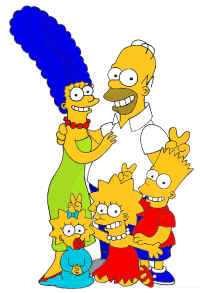
Bill and Josh's Old Gig - The Simpsons
In 1995, Bill Oakley and Josh Weinstein were executive producers on the ground-breaking animated sitcom The Simpsons. As executive producers, and earlier as writers, their contributions led to many of what are considered to be the show’s finest episodes, including the famous ‘Who Shot Mr. Burns’ two-part storyline that served as a season cliffhanger. It was during this time that they found themselves restricted in regards to the types of stories they could tell due to the lack of characters who were between the age of 10 and 30.
“When we were running The Simpsons, we were always frustrated,” Bill Oakley explained, “because all the characters are either under the age of 10 or over 30-except for Otto so we cold never do any stories about people in that in-between age group since there wasn’t anyone around-no high school, no college, no first jobs, no sex.”
With a lot of ideas they could never use for The Simpsons, Bill and Josh decided if if they couldn’t cover that ground on the show, a new show would have to be constructed where they could.
One idea for The Simpsons the duo had not produced was a story about the family visiting a downtown neighbourhood to visit a hip cousin, only to find they didn’t understand what was going on in their new surroundings. The writers also found inspiration in underground comic books such as Peter Bagge’s Hate and Dan Clowes’ Eightball, for both visual and storytelling perspectives. From this, the seeds were planted for what would become Mission Hill.
Going Downtown

- The WB, Original Home for Mission Hill
The new show was set in the Mission Hill district of the fictional city of Cosmopolis, and was originally dubbed The Downtowners. The Downtowners was pitched and picked up in the fall of 1997 by Garth Ancier, the then-head of programming at the WB network, for eighteen episodes.
Lauren MacMullan, an animation director who had worked on shows such as The Critic and King of the Hill was brought on to create the show’s visual style. Since the show’s writing team was taking inspiration from underground comics such as Eightball by Dan Clowes, MacMullan created a style that drew inspiration from the same medium. Particular works included Hate by Peter Bagge and the work of famed cartoonist Harvey Kurtzman, whose work included the original Mad magazine. The result was an indie-comic artistic style along with a bright, clashing colour scheme.
According to Bill Oakley, the colours were actually misregistered on purpose like a comic, and the style were compositions you didn’t see on TV. In fact, lots of the show’s colours were not broadcastable on TV or the web, since the cells were painted with flourescent day-glow colours.
As one of many references to the show’s roots, the show’s opening with its simple colours and four panel design was in fact a subtle homage to the medium.
The show’s fictional world was fleshed out extensively with recurring brand names, businesses, citizens, and buildings. As well, the city was peppered with hidden ‘freeze-frame’ jokes, from funny signs to unusual background images, designed for the more hardcore animation fans that enjoyed this kind of humour on The Simpsons.

Andy French
Drawing some inspiration from real-life, (though to prevent anyone from becoming offended, the people who were inspirations are kept secret) Bill and Josh created the main characters. The show revolved around 24-year old Andy French and his 17-year old brother Kevin French, who wreaks havoc on Andy’s life when he suddenly moves in with him. Also living with the French brothers were Andy’s mellow best friend Jim Kuback, new age flower child Posey Tyler, and Andy’s former family dog Stogie.
The show’s extensive cast of supporting characters included Carlos and Natalie, a painter and professor respectively who are married and raising a baby; and Wally and Gus, a gay couple in their 60s who fight loudly and make up even louder, both on a constant basis.

Kevin French
With the characters in place, the cast was assembled. From the beginning the show’s creators wanted veteran voice actors Tom Kenny and Nick Jameson due to their immense versatility and talent; since the show had a huge cast of supporting characters that often changed depending on the story requirements.
The rest of the cast was filled in with auditions, which is typical for almost any television program. After the auditions were held, the first choice for Andy French was Wallace Langham, who accepted the role. Although of interest to fans of Buffy the Vampire Slayer is that Nicholas Brenden, who played Xander on the series, was the second choice.
Scott Menville was chosen for Kevin after many other actors portrayed him as simply too nerdy, according to Bill Oakley.
Vicki Lewis was cast as Posey, thanks to a dentist appointment prior to the audition that had affected her voice, giving it Posey’s unique, breathy tone. What also gave the actress an edge was that she was able to play both Posey and Natalie.

- Cake – Fashion Nugget
Oakley and Weinstein arranged for the show’s theme music to be a shortened instrumental version of their song “Italian Leather Sofa” by their favourite band, Cake. Additionally, many independent bands were licensed to have their music played during certain episodes, including Moby, Looper, Razed in Black and many more. Eric Speier was brought on to compose the show’s original music.
As production continued, one minor hurdle that arose was a conflict with the show’s title, The Downtowners. An unrelated animated project at MTV entitled MTV Downtown was in production at close to the same time. As a result, the show was renamed Mission Hill, after the character’s neighbourhood,
The newly re-christened Mission Hill was marketed to be to Friends or Felicity what The Simpsons was to the The Cosby Show. The Simpsons, during its early years, drew many comparisons to The Cosby Show for its contrasting, though to some more accurate, portrayal of an American family.
A sneak peek broadcast date of September 21, 1999 on the WB was set, with the show’s regular timeslot being on Fridays starting September 24, 1999.
It seemed like a promising start, however it wouldn’t take long for things to begin unraveling.
Mission Aborted
Right off the bat, Mission Hill faced an uphill battle. First, its premiere scored a mere 2.0 rating (from Nielsen: A rating is a percent of the universe that is being measured, most commonly discussed as a percent of all television households). Then, the show was not aired until the broadcast of the episode “Kevin’s Problem” on October 8, 1999 at 8 pm, eighteen days after the premiere, which meant many people may have forgotten about the new program by that time. That night, the show pulled an share of 1.1, which was down from the show that had previous occupied the same timeslot the week before, The Jamie Foxx Show.
Dawson's Creek
Also working against the program was a shift in the WB’s target audience. In 1998, just after Mission Hill had been picked up, the WB had their breakthrough hit with the teen drama Dawson’s Creek. That show’s core audience was teenage girls, and the network decided to concentrate its efforts on this appealing to more viewers of this specific demographic. As a result, the show did not receive a huge marketing push from the WB, most people may not have even been aware of the program’s existence.
“There’s a lot of luck involved in having a successful TV show. To be successful you have to appeal to millions of people of diverse backgrounds, it may have been on the wrong network,” remembers Bill Oakley.
After its airing on October 18, the show was pulled from the WB. The reason for this was supposedly Ancier’s successor at the WB Susanne Daniels, and the show’s production company Castle Rock, decided it was too much to ask Mission Hill to kick off a lineup that included The Jamie Foxx Show, The Steve Harvey Show and For Your Love on Fridays. So it was decided the show would return at a later date in the spring of 2000. Despite that promise, the show did not air again until June 25, 2000. Incidentally, it was now being kicked off by the lineup of The Jamie Foxx Show, The Steve Harvey Show and For Your Love.
Mission Hill was back to a weekly schedule for four weeks, where the episodes “Andy & Kevin Make A Friend”, “Kevin vs. The SAT”, “Andy Gets A Promotion”, and “Unemployment, Part 1″ were shown. But immediately after that, the show was once again pulled and Mission Hill was never seen on the WB again, with seven complete episodes still unaired and five incomplete episodes in limbo.
At this point, Mission Hill seemed dead in the water.
The Hills Are Alive?
After the show went off the air for good on the WB in the summer of 2000, Mission Hill seemed like it would wallow in television obscurity forever. However, things were about to change.
The first signs of a Mission Hill revival came when the Canadian animation network Teletoon began airing the series in the fall of 2001 as part of its new “Teletoon Unleashed” block of programming intended for adult audiences. The show was a hit on Teletoon, and gained the show had a cult following in Canada.

Cartoon Network Logo
In the same year, the Cartoon Network in the US purchased the rights to broadcast Mission Hill for its “Adult Swim” lineup of adult-oriented animated programs. In May 2002, the show returned to US television for the first time in almost two years, and began a run on Cartoon Network that would see all thirteen episodes shown to US audiences at last.
At this point, the show had gained a fair number of fans: the number of members in the Mission Hill Yahoo Group had grown to over 300, and Mission Hill Online had been running from December 2001 to fill the need for a Mission Hill fansite.
All this success came late however, as the show had already been out of production for years. Fans clamoured for more Mission Hill episodes, but there was no movement at the studios, despite the existence of five complete episode scripts and some storyboards.
With only one season of produced episodes, both Teletoon and Cartoon Network eventually dropped Mission Hill; although this was after the show had run its course multiple times. Mission Hill fans were at least left satisfied that they were finally given the chance to watch every episode, but they were still wanting more.
Mission Analysis
While Mission Hill has many devoted fans, from the viewpoint of the WB, its original network, the show did not succeed and thus the show’s production was ceased. Besides the unusual scheduling and marketing decisions made by the WB, there were other reasons the show may have failed to catch on.

Dan Clowes - GhostWorld and Eightball
The show’s tone and style was heavily influenced by underground comic books. Oakley admits that during production, they overestimated the medium’s popularity. He remembers, “we learned after the show was already cancelled that there’s only about five thousand people in all of America that are familiar with that stuff!” The show was also considered by Oakley to be an ‘apex’ of writing subtle jokes that nobody got. One example is the story of Andy and Jim working at the advertising agency. This was a parody of the popular late 80′s drama thirtysomething, which also had two friends working at an advertising agency. Both shows even featured David Clennon as the character’s boss.
It was this level of sophistication and subtlety to the writing that while appreciated by the show’s fans, may have contributed to the show’s downfall. In North America there is a long-standing stigma that animation is targeted towards children. As a result, many viewers who would have understood all the references and caught the subtle jokes, may have avoided the show because of that. And children may not have understood the show’s style of humour or appreciated its unusual visuals.
“The show was too rarified for television, but perfect for cable. It appealed to a small audience,” remembers Bill Oakley. “The Simpsons, everybody watches it, including little kids, if little kids don’t watch, you are doomed to obscurity.”
“Mission Hill has very little for young kids. For teenagers and up, yes, but nothing for the under 12 set,” agreed Josh Weinstein in a 2003 interview with Morphizm.com
Regardless of the reasons why, and despite its newfound life on cable, Mission Hill did not make it past thirteen episodes, and any future the show has is uncertain at best.
The Next Mission
Years after at this point, there is unfortunately little hope for a revival of Mission Hill for several reasons. First, the cast and crew have all moved on to other projects, and despite the show’s runs on Cartoon Network and Teletoon it still remains more of a cult hit than anything else.
One enormous hurdle is the show’s cost. During production, Mission Hill cost about $1.2 million dollars per episode. So it is out of range for the Cartoon Network, who is used to spending about $300,000 per episode for an original series. “They would not want to spend 1.2 million on one episode when they could buy four episodes of Aqua Teen Hunger Force,” elaborates Bill Oakley.
As well, mainstream networks these days are trying to cut down on a television show’s budget; especially with the continuing popularity of reality programming, which is extremely cheap to produce and can produce exceptionally high returns. So generally, networks are turning away from producing new prime-time animation.
A Mission Hill DVD set remains a possibility; due to the immense success of the Futurama and Family Guy DVDs, which were also under appreciated prime-time animated series. Currently the rights are held by Warner Bros., but as Bill Oakley explains, “they may not be aware they hold the rights to it.” The show’s creators are still trying to convince executives at Warner that a DVD set would be worth the effort. However they admit no progress has been made at this time.
Despite all the hardships the show has faced, nothing can ever erase the show’s accomplishments. The thirteen episodes that were produced continue to be beloved and analyzed by the show’s fans, who even distribute the episodes themselves via bootleg DVDs and VCDs. Even the show’s creators take efforts to reach out to the show’s fanbase by releasing via the internet the scripts for the episodes that were not animated, which they consider to be the best episodes of the series.
And on November 9, 2003, Mission Hill returned to the Cartoon Network for another run on the Adult Swim programming block, where fans new and old have another chance to watch the thirteen completed episodes.
“We are extremely proud of Mission Hill,” says Oakley. Oakley continues to receive emails from fans of the show, and he believes that Mission Hill is possibly the one show on television where fans can have direct communication with the people who created it, “because we love it as much if not more than you guys and we feel the people who appreciate it are in the same league as us, and we’re a little sad it didn’t keep going, and we didn’t see the unproduced episodes.”
- Ryan, Webmaster of Mission Hill Online
11/01/2003
A huge thank you to Bill Oakley for his extensive contributions to this article, and for helping to teach us that ‘Bling’ goes with ‘Blong’